

Learn with evidence-based science
The science of being present.
Mindfulness and MBSR®: what they are, what the science says, and how they can transform your everyday life.
30+ years
of clinical research
8 wks
Structured MBSR® program
NIH
Recognized by medicine
1979
Origins at the University of Massachusetts
Present-moment awareness
What is Mindfulness?
Mindfulness is the basic human ability to be fully present, aware of where we are and what we're doing, without overreacting or feeling overwhelmed by what's happening around us.
It means paying attention on purpose, in the present moment, without judgment. This practice allows us to observe our thoughts, emotions and bodily sensations with curiosity and acceptance.
Through mindfulness we develop a greater awareness of ourselves and the world around us, which lets us respond to life's situations with more clarity and balance.
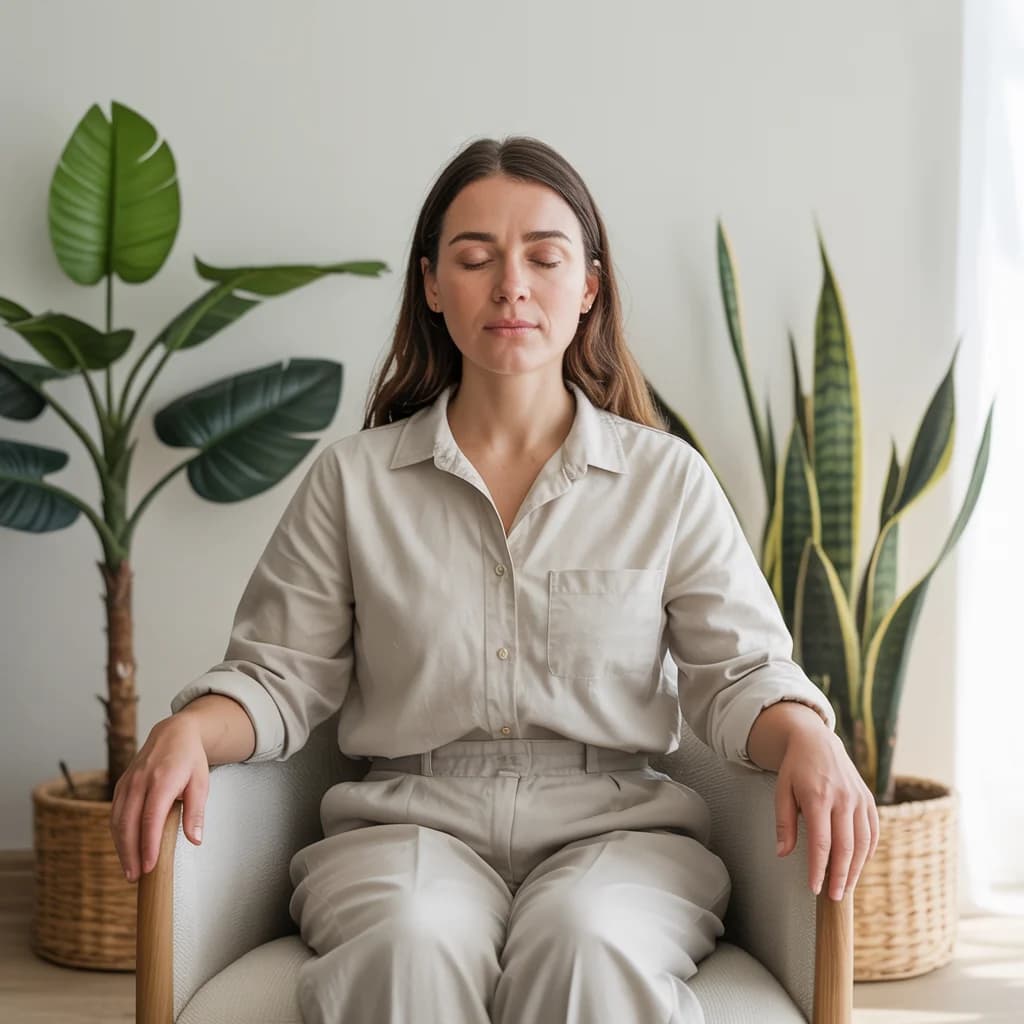

Mindfulness-based stress reduction
What is MBSR®?
A mental training of attention backed by decades of scientific evidence.
The MBSR® program (Mindfulness-Based Stress Reduction) has become a reference point in mind-body medicine: recognized by the NIH and classed, within psychology, among the so-called third-wave therapies.
Developed in 1979 by Dr. Jon Kabat-Zinn at the University of Massachusetts, it adapts centuries-old contemplative practices to a secular, scientific context.
What the program works on
What you build through practice
MBSR® is a structured 8-week program that works progressively across four fundamental areas of wellbeing.
Reduce stress
Reduce stress, discomfort and mental overload through conscious attention.
Emotional regulation
Improve emotional regulation in difficult situations with greater equanimity.
Mental clarity
Develop more attention and mental clarity day to day, with less autopilot.
A healthier relationship
Relate more consciously and kindly to your own thoughts and emotions.
You can take it online, at your own pace, with our courses and programs. The practices include meditation, body scan and mindful movement woven into everyday life. View courses
It's not about emptying the mind, but about learning to relate to our experience more consciously and kindly.
MBSR® Program · Evidence-based mindfulness
Go deeper in your practice
Start here with mindfulness
Five practical guides to take your first steps, learn concrete techniques and get your questions answered.
Beginner's guide
Everything you need to know to get started: how much to practice, common mistakes and realistic expectations.
Free resources
Guided meditations, practical exercises and tools to reduce stress and cultivate a more mindful life.
STOP technique
A 1-to-3-minute conscious pause to step out of autopilot and respond with more clarity.
RAIN technique
Four steps for working with difficult emotions consciously and compassionately.
FAQ
Clear answers to the most common questions about mindfulness, meditation and the MBSR® program.
Common questions
Frequently asked questions
Answers to the most common questions about mindfulness and MBSR®.
Do I need previous experience to practice mindfulness?
No, you don't need any previous experience. Mindfulness is a natural human capacity that everyone has and that can be developed with practice. Programs like MBSR® are designed specifically for beginners and will guide you step by step through the learning process.
How much time do I need to practice each day?
To get meaningful benefits, practicing 20–45 minutes a day is recommended. However, even brief 5–10 minute practices can be beneficial. Consistency and regularity matter more than the length of any single session.
Is mindfulness the same as meditation?
Mindfulness is a state of present-moment awareness that can be cultivated through meditation, but it can also be practiced during any everyday activity. Meditation is one of the main tools for developing mindfulness, but the two aren't exactly the same thing.
How long does it take to see results?
Many people report benefits from the first few weeks of practice, such as greater calm and better concentration. However, deeper changes usually appear after 8 weeks of regular practice, the length of the standard MBSR® program.
Is mindfulness a religious practice?
No. Although it has roots in Buddhist traditions, mindfulness as taught in programs like MBSR® is entirely secular and scientific. It doesn't require adopting any religious belief and is compatible with any spiritual or philosophical tradition.
Can it help me if I have anxiety or depression?
Numerous scientific studies have shown that mindfulness can be very effective at reducing symptoms of anxiety and depression. However, it doesn't replace professional medical or psychological treatment. It's advisable to consult your doctor before starting if you have any mental health condition.
What's the difference between MBSR® and other relaxation techniques?
Unlike relaxation techniques that aim for a specific state, MBSR® teaches you to relate differently to your experience, whatever it may be. It's not just about relaxing, but about developing awareness, acceptance and skills to manage stress in a sustainable way.
Begin your practice
Mindfulness is learned by practicing it.
Discover the online courses and programs we offer to support your practice.